Protect Your Health with Accurate Radon Testing
Radon Testing in Lockport for homeowners and buyers concerned about indoor air quality and long-term exposure risks
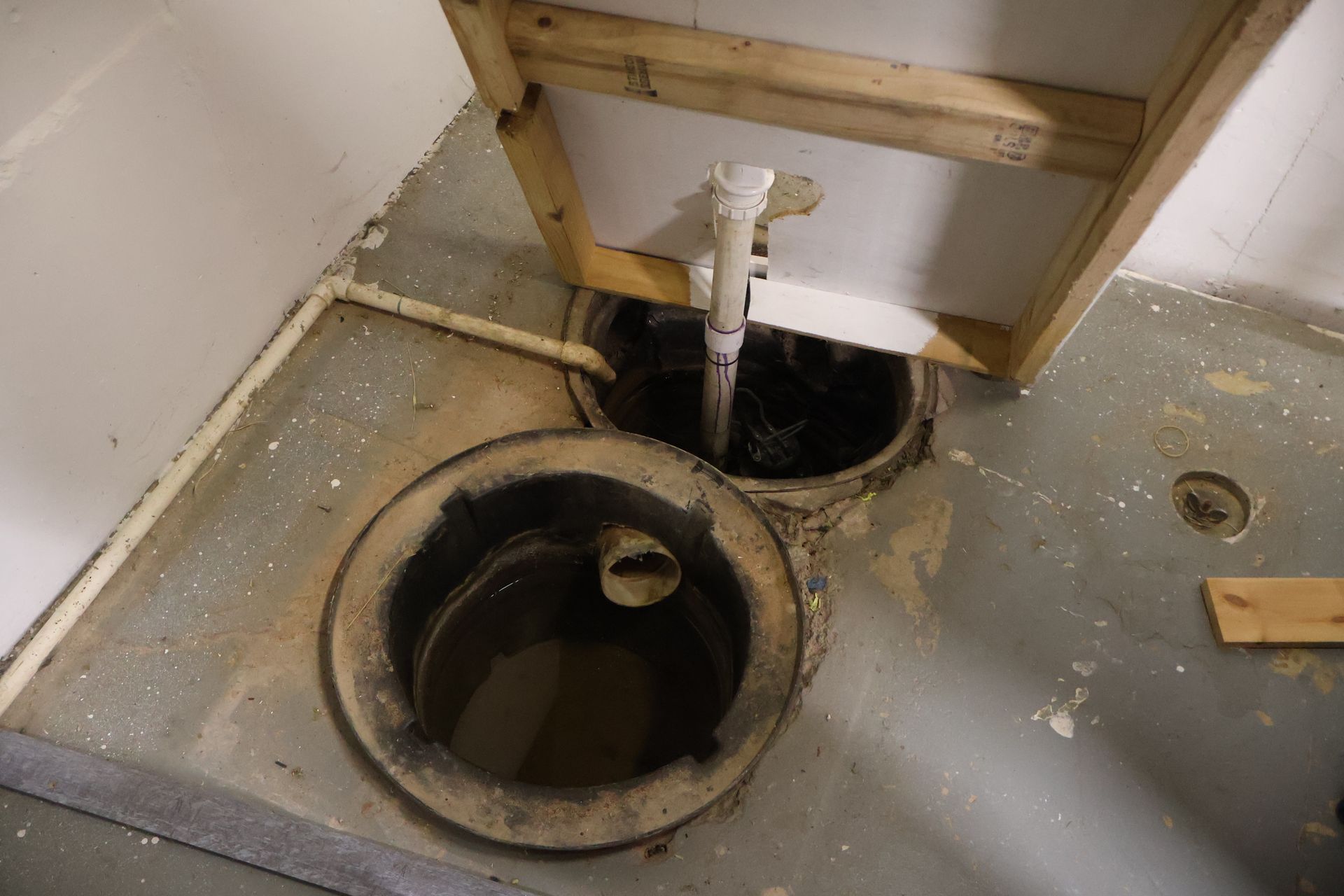
WNY Select Home Inspections LLC conducts professional radon testing in Lockport and throughout Western New York for homeowners, buyers, and real estate professionals who need reliable data on radon levels before closing a sale or assessing long-term health risks. Radon is a naturally occurring radioactive gas that forms when uranium in soil and rock breaks down, and it enters homes through cracks in foundations, floor joints, sump pits, and gaps around utility penetrations. You cannot see, smell, or taste radon, but prolonged exposure is the leading cause of lung cancer among non-smokers in the United States. Testing involves placing a calibrated device in the lowest livable area of the home for a set period, then analyzing the results to determine whether levels exceed safety thresholds established by the Environmental Protection Agency.
The test is commonly requested during real estate transactions, particularly when buyers want to confirm air quality before finalizing a purchase, or when homeowners want to evaluate risk after learning about radon prevalence in their area. In Western New York, radon levels vary significantly depending on soil type, foundation construction, and ventilation patterns, and some neighborhoods show higher readings than others even within the same municipality. The testing device remains undisturbed in a closed-home environment, and results are provided in a clear report that includes measured levels, comparison to EPA action guidelines, and recommendations for mitigation if levels are elevated.
If you are buying a home in Lockport or want to test your current property for radon, reach out to schedule testing and discuss how the process works alongside or separate from a home inspection.
How Radon Testing Works and What the Results Tell You
Radon testing follows guidelines set by New York State and national standards to ensure accuracy and consistency. The testing device is placed in the lowest occupied level of the home, such as a basement or ground-floor living area, and windows and exterior doors remain closed for the duration of the test except for normal entry and exit. The device measures radon concentration over a minimum period, typically 48 to 72 hours, and records fluctuations caused by changes in air pressure, soil moisture, and ventilation. After the test is complete, the device is retrieved and the data is analyzed to produce a reading measured in picocuries per liter.
You receive a report from WNY Select Home Inspections LLC that shows the measured radon level and compares it to the EPA action level of four picocuries per liter. If your result is below that threshold, no immediate action is required, though retesting every few years is recommended since radon levels can change over time. If the result is at or above four picocuries per liter, the report will recommend mitigation, which typically involves installing a vent system that draws radon from beneath the foundation and exhausts it outdoors. The report does not include mitigation services or cost estimates, but it gives you the information needed to make decisions about next steps.
Testing can be conducted as part of a full home inspection or as a standalone service. It does not require damage to the home, and the process is non-invasive. Results are especially important in homes with basements, slab foundations, or crawl spaces, and in areas where neighboring properties have returned elevated readings. Radon levels are not predictable based on age or appearance of the home, so testing is the only way to know your actual exposure.
Advanced Gas Leak Detection for Your Safety
At WNY Select Home Inspections, we use professional-grade tools like the Klein Tools ET120 Gas Leak Detector to help identify potentially dangerous gas leaks quickly and accurately.
Sensitive Detection Technology
Our gas detector identifies leaks by sensing changes in the surrounding air. It reacts to the presence of combustible gases such as natural gas, propane, and methane, allowing us to detect even small concentrations that may indicate a leak.
Clear, Real-Time Alerts
The device provides immediate feedback using a combination of visual and audible alerts. LED indicators increase from green to red as gas levels rise, while audible beeps become more rapid as we get closer to the source—helping us pinpoint leaks with precision.
Accurate Leak Identification
With its flexible 18-inch gooseneck probe, we can inspect tight or hard-to-reach areas where gas leaks are most likely to occur. This allows us to thoroughly evaluate appliances, piping, and connections throughout the property.
Added Protection for Your Clients
By incorporating advanced gas detection into our inspections, we provide an extra layer of safety and peace of mind. Our goal is to identify potential hazards early, helping protect both the property and its occupants.
Homeowners and buyers often want to understand what radon is, how testing is performed, and what happens if levels are high.
Common Questions About Radon and Testing
What causes radon to enter a home? Radon moves upward through soil and enters homes through cracks in foundation slabs, gaps around pipes, sump pump openings, and porous block walls, drawn in by differences in air pressure between the soil and the interior.
How long does radon testing take? Most radon tests require the device to remain in place for 48 to 72 hours under closed-home conditions, and results are typically available within a few days after the device is retrieved.
Why is radon testing important in Lockport and Western New York? Radon levels vary widely across the region due to differences in bedrock composition and soil characteristics, and some properties show elevated readings even when neighboring homes do not.
What should I do if the test shows high radon levels? You should contact a certified radon mitigation professional to evaluate your home and install a system that reduces radon concentration to safer levels, usually through sub-slab depressurization or crawl space venting.
When should radon testing be done during a home purchase? Testing is typically scheduled during the inspection period after an offer is accepted, giving buyers time to review results and request mitigation or renegotiate terms if levels are elevated.
WNY Select Home Inspections LLC offers radon testing throughout Lockport and surrounding areas using reliable methods that follow state and federal guidelines. If you need testing for a real estate transaction or want to assess your current home, contact the team to discuss scheduling and what the process involves.
Homeowners in New York State can order a radon test from the State Department of Health for $12.25 by completing this order form .
Price includes test kit, analysis and postage to send the test kit to the laboratory.
Be sure to follow all test instructions. It very is important that the home is sealed up and all doors or windows to the outside are closed 24 hours before and during the entire testing period to ensure an accurate test. However, you can leave and re-enter your home.

Track Radon Test Result Data in the Environmental Public Health Tracker. You can view maps, graphs and tables of radon test results in your county.
Radon is the leading cause of lung cancer among nonsmokers. You can’t see, smell or taste it, but radon could be present at a dangerous level in your home.
Radon is a naturally occurring, radioactive gas found in soil and rock that gets into the air you breathe. It seeps into buildings through cracks in the foundation, walls, and joints. It can get into any type of building--homes, offices, and schools. The greatest risk for exposure is where you spend most of your time – usually at home.
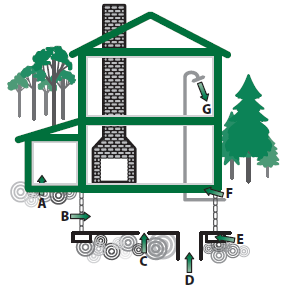
How Radon Enters the Home
A. Cracks in concrete slab
B. Pores and cracks in concrete blocks
C. Slab-footing joints
D. Exposed soil, as in sump
E. Cracks between poured concrete (slab) and blocks
F. Loose fitting pipes
G. Water
Test Your Home for Radon
When to Test
- Every five years, or every two years if you have a radon mitigation system to make sure it’s working properly.
- During the winter months when your windows and doors can stay closed 24 hours before and during the entire testing period. However, you can leave and re-enter your home.
- When buying a home and after major renovations.
- Before buying a home, hire a certified radon testing professional. Check that the results of the test is will come from a laboratory approved through the State's Environmental Laboratory Approval Program.
- Check that the laboratory used to analyze the results is approved through the State's Environmental Laboratory Approval Program.
- Within 30 days of installing a radon mitigation system.
Understanding Your Test Results
New York State Health recommends fixing your home if the results of radon tests show levels of 4 picocuries per liter of air (pCi/L) or higher. With today's technology, radon levels in most homes can be reduced to 2 pCi/L or below. You also may want to consider fixing if the level is between 2 and 4 pCi/L.
Find out if radon levels are high in your town.
Fix a Radon Problem
A radon reduction system can reduce radon levels in your home by up to 99% and average cost is about $1,500. If your home has elevated levels of radon, contact a certified radon mitigator. More information is available at the U.S. EPA's Consumer's Guide to Radon Reduction.
Building Homes To Keep Radon Out
New construction methods keep radon out of the home by sealing soil gas entry points, by preventing radon gas from entering the home and by venting to release radon gas outdoors. Installing a radon reduction system during construction is easier and less expensive than installing a system after the house is completed. Every new home should be tested, even if it was built to be radon resistant. If radon levels are still at or above 4 pCi/L, a certified mitigator may activate the system by installing a fan.
More Information
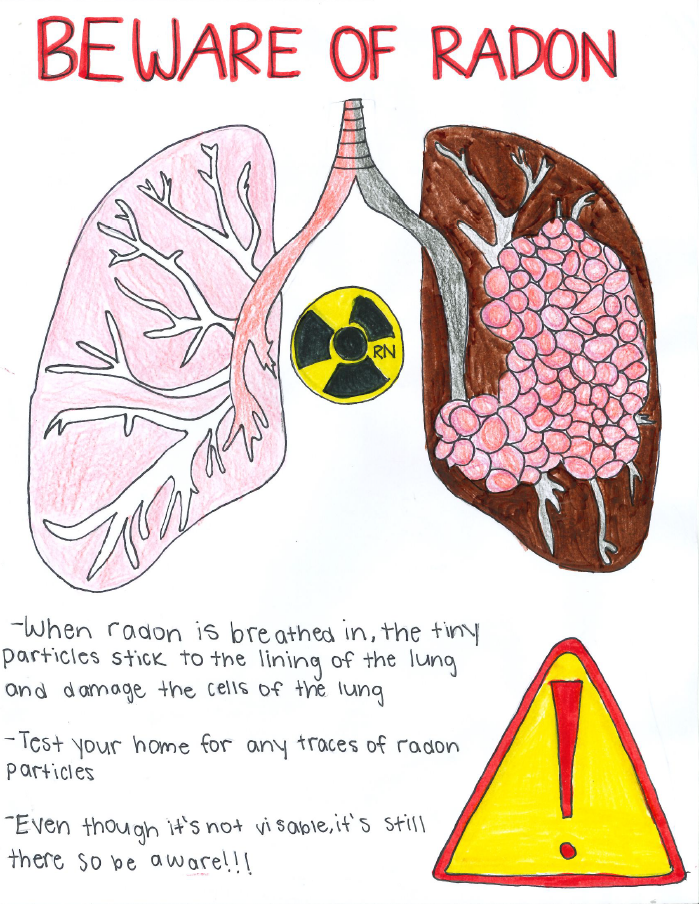
Annual Radon Poster Contest
Congratulations to the 2025-2026 winners of the New York State Department of Health Radon Program's annual radon poster contest. View the winning posters and learn about how students can participate in the 2026-2027 contest.
Radon Professionals
The American Association of Radon Scientists and Technicians and the American National Standards Institute (AARST/ANSI) have developed National Radon Standards for radon testing and mitigation. These are the currently accepted standards and supersede previous EPA standards for radon.
Find Regional Radon Training Centers for continuing education.
Radon testing firms and mitigators must report testing results to the DOH. View Title 10 NYCRR 16.130 Radon Testing and Reporting for laws and regulations.
For Radon Testing Firms/ELAP Certified Laboratories:
Part 16 of the New York State Sanitary Code requires the reporting of County or Zip Code and number of measurements. You are only required to report the name of the laboratory in cases where the laboratory report the radon results to DOH.
For Radon Mitigators:
Part 16 of the New York State Sanitary Code requires the reporting of County or Zip Code and number of mitigations.
Please email radon@health.ny.gov or call (518) 402-7556 to request the Excel spreadsheet template for reporting your data.
Completed reports can be submitted via:
- Email to radon@health.ny.gov
- U.S. Postal Service to: Center for Environmental Health
Center for Environmental Health
Bureau of Environmental Radiation Protection
Empire State Plaza-Corning Tower, Room 1201
Albany, New York 12237
Medical Professionals
You can impact the health of New Yorkers by encouraging radon testing and mitigation, to help reduce the likelihood of radon induced lung cancer. Please consider:
- Making radon educational materials available in your waiting room.
- Displaying the "Have You Given Your Home a Radon Checkup?" poster.
- Including a question about home radon testing on your patient intake form.
- Scheduling a radon presentation for medical support staff by calling 518-402-7556 or by emailing radon@health.ny.gov.
- Providing patients with information about how low-cost test kits may be obtained from the Radon Program..
- Referring patients with more questions to the Radon Program.
These resources may also be helpful:
- The Conference of Radiation Control Program Directors, Inc., has developed a new guide for health care providers entitled Reducing the Risk from Radon: Information and Interventions. This guide was designed to furnish health care providers with the information they need to reduce their patients' exposures to radon.
- The Iowa Cancer Consortium has the Breathing Easier Campaign, which includes videos as well as educational fliers and pamphlets that can be customized for use in your practice. The webpage also has links to other radon resources for physicians.
- The Centers for Disease Control and Prevention (CDC) has developed a radon toolkit which contains graphics and customizable documents designed to educate on the risks of radon exposure.
- The Agency for Toxic Substances and Disease Registry (ATSDR) has developed a toxicological profile for radon, an ATSDR Clinician Brief: Radon (atsdr.cdc.gov) and Radon Case Study Environmental Medicine (CSEM) provides several radon training modules for continuing education credits.
- The Health Physics Society (HPS) is a scientific organization of professionals who specialize in radiation safety. The HPS develops position papers on various radiation topics, including radon.
- The New York State Comprehensive Cancer Control Plan was created by the NYS Cancer Consortium (NYSCC) and is meant as a guide to identify and address the cancer burden in NYS.
- Federal Radon Action Plan (FRAP) contains current federal government actions to reduce radon risks, and a series of new commitments for future action. These actions include providing resources and support to organizations and individuals and increasing awareness for builders and service industry professionals.
- The National Radon Action Plan (NRAP) represents a collaborative effort between eleven organizations dedicated to eliminating avoidable radon-induced lung cancer in the United States. Led by the American Lung Association, the national radon workgroup agreed on a framework for action aimed at incorporating radon testing, radon mitigation and radon-resistant construction into systems that govern purchasing, financing, constructing and renovating homes and other buildings.
- The Cancer Moonshot Report was delivered by former Vice President Biden in October 2016. The report summarizes the work of the Cancer Moonshot Task Force since its creation and lays out the Vice President's strategic plan for transforming cancer research and care. The report also includes the Cancer Moonshot Blue Ribbon Panel's identified areas of scientific opportunity.
- The World Health Organization (WHO) has developed a Handbook on Indoor Radon.
- The National Academy of Science, Biological Effects of Ionizing Radiation (BEIR) VI Committee has published a report on the Health Effects of Exposure to Radon.
- The US Environmental Protection Agency (EPA) has published an Assessment of Risks from Radon in Homes, EPA 402-R-03-003.
Day Care Providers
The New York State Office and Children and Family Services requires radon testing as part of an Environmental Hazards Assessment when applying to be a licensed daycare provider in certain areas of the state.
Radon Level Maps and Statistics
Track Radon Test Result Data in the Environmental Public Health Tracker. You can view maps, graphs and tables of radon test results in your county.
Radon test results below can be viewed in different formats, charts, and datasets. This information is supported by Health Data NY.
- Radon Test Results by County: Beginning in 1987
- Radon Test Results by Town: Beginning in 1987
- Detailed New York State Town Maps and Tables - These maps and data tables use measurement data, as well as other information, such as local geology.
NYS Radon Task Force
The NYS Radon Task Force was established by Chapter 414 of the Laws of 2018 to conduct a comprehensive study on the prevention of human exposure to radon and make recommendations to reduce and minimize exposure to New York State residents. The Council is chaired by the DOH.
Specific items to be addressed include:
- The need for interagency coordination of public education and outreach and prevention programs
- The need for training, education and possible licensing of radon services providers
- Any other related information that the commissioner of health may deem necessary or relevant in carrying out such study of radon in indoor settings
A report of the findings and recommendations of the task force and any proposed legislation necessary to implement such findings shall be filed with the governor, the temporary president of the senate, the speaker of the assembly, the minority leader of the senate, and the minority leader of the assembly on or before November 1, 2022.
Please contact radon@health.ny.gov for additional information.
The NYS Radon Task Force consists of the following members:
| Name | Seat Category |
|---|---|
| VACANT | Governor's Appointee – Real Estate Representative |
| George Schambach | Governor's Appointee – Radon Testing & Mitigation Expert |
| Richard Kornbluth | Temporary President of the Senate Appointee |
| VACANT | Speaker of the Senate Appointee |
| John Addario, Director – Division of Building Standards & Codes | Secretary of State or Designee |
| Gary Ginsberg, Director – Center for Environmental Health | DOH Commissioner or Designee |
| Selica Grant – Chief Risk Officer and Special Counsel | DOL Commissioner or Designee (left July 25, 2022) |
| Darren Cohen – Deputy Commissioner for Policy, Strategy and Research | DOL Commissioner or Designee (appointed July 25, 2022) |
Final Report
The approved NYS Radon Task Force Report (PDF) was transmitted to the governor and specified members of the legislature on January 12, 2024. Questions can de directed to the NYS Radon Program at radon@health.ny.gov .
PDF Meeting Information:
- Friday, July 22, 2022 Agenda and Minutes
- Thursday, June 30, 2022 Agenda and Minutes
- Tuesday, May 31, 2022 Agenda and Minutes
- Monday, April 25, 2022 Agenda and Minutes
- Friday, March 11, 2022 Agenda and Minutes
- Thursday, February 10, 2022 Agenda and Minutes
- Thursday, January 6, 2022 Agenda and Minutes
- Thursday, November 4, 2021 Agenda and Minutes
- Thursday, October 7, 2021 Agenda and Minutes
Resources
NYS DOH Resources
US EPA Resources
Additional Resources
Click here to visit